20th May 2026
Wellbeing for forensic science practitioners
Read more

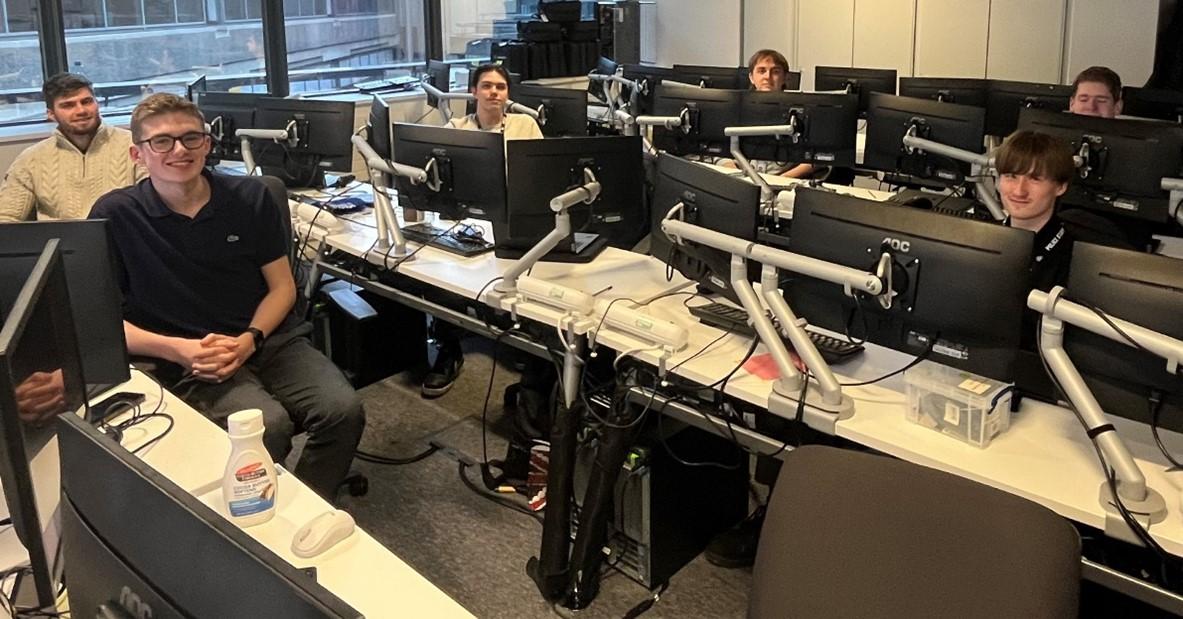
The first cohort of Level 4 Digital Forensic Technician apprentices started their journey in July 2024. The forensic community had spent significant time and resources creating this new apprenticeship in order to widen the access routes into digital forensics and to improve retention.
Our Workforce Strategy Lead met with nine of the apprentices at the Metropolitan Police Service to find out more about their journey so far.
Some of the apprentices had worked prior to the apprenticeship but most had come straight from college or school. One lucky apprentice had only finished school a week before he started.
Many had applied for university places and one has even completed a year at Uni but all of the apprentices wanted something more hands on that gave them the opportunity to learn more about the subject while working and developing the practical skills that they would need in the role.
All of the apprentices loved technology and were all gamers. Even those with little previous knowledge of computers they were all passionate about digital forensics and wanted to learn more.
Most responses were very positive and the apprenticeship had offered what they expected. Some apprentices had not known what to expect and so did not have expectations. This is the first cohort of the apprenticeship and so there had been no previous examples to learn from and the usual institutional personnel changes had made it challenging for some.
Peers and colleagues were seen as the best bit for some. This is very positive as roles in digital forensics can be challenging and wellbeing research shows that peer support is one of the best ways of protecting mental health.
The Met has a large cohort of 12 apprentices and most thought that this was good as there was always someone to ask for help. They were also positive about meeting apprentices from other forces during the structured learning. All of the apprentices were from a similar age group and they enjoyed this too.
They were also positive about moving between disciplines and learning lots of different skills. They were also really positive about the use of mentors as a part of the apprenticeship.
Note: the FCN hold regular meetings with all of the mentors to share good practice and to learn from each other and this has been really positive for all so it is good to see that the apprentices appreciate their mentors.
As there are four forces on the apprenticeship they all work in different ways and they way the disciplines have learned skills in the workplace has differed. Sometimes the learning provision has not been at the same time that they have completed this in the workplace but all apprentices understood this and there were not any negative comments.
A very loud YES from all. They all thought it was a great way to get experience, learn valuable skills and hopefully lead to a career in digital forensics.
It is important to note that not all forces apprentices will automatically move into a permanent role.
The apprentices were very positive and hopeful of having a career in digital forensics in policing or other investigation organisations. Some were interested in moving into more specialised roles and they were very positive about their time with the MPS.
They would like to have information about future careers and applying for future roles – this is something that the MPS will be providing to them. They would have preferred a modular learning and assessment structure (this is going to happen with changes to assessments being introduced by Skills England).
*
The apprenticeship journey has been a positive one for all involved to date. There are obvious benefits to the apprentices who gain workplace skills that are otherwise very difficult to obtain, complete a well-structured learning programme that gives them the academic background to the skills they learn and provides them with the workplace experience that makes them qualified to apply for advertised roles.
For the organisations it gives them new and enthusiastic team members who are passionate about digital forensics, keen to learn and the use of levy funding makes this a more cost-effective approach. The learning provision covers the theoretical and practical skills that are so important. The MPS also provide their own training programme in house, but not all apprenticeship providers do and the required knowledge, skills and behaviours for the role are all covered within the apprenticeship learning.
The mentors and training leads within the MPS were positive about the experience and hope that they will be able to recruit further apprentices in the future. The digital forensic specialist trainer from the MPS stated that:
“We’ve really enjoyed being a part of the initial cohort of the Level 4 – Digital Forensic Technician Apprenticeship. Working with the FCN and the external training provider has been really positive. It has also been an opportunity to build relationships with other Digital Forensic Units across the country. Our Apprentices have all successfully gained competency in multiple Digital Forensic Disciplines, and have been actively been working on casework, having a positive impact on the criminal justice system and helping bring offenders to justice in London. All of this whilst carrying out their studies which is testament to the hard work they have put in.”
For any forces or organisations interested in the Level 4 Digital Forensic Technician apprenticeship please contact joanne.morrissey@dorset.pnn.police.uk. You can also refer to the following information.
Digital forensic technician / Skills England
Digital forensic technician (level 4) - apprenticeship training course
Training providers for Digital forensic technician (level 4)
20th May 2026
28th October 2025
15th September 2025
11th September 2025